If you are thinking about opening a padel club, Sweden is the story you need to know.
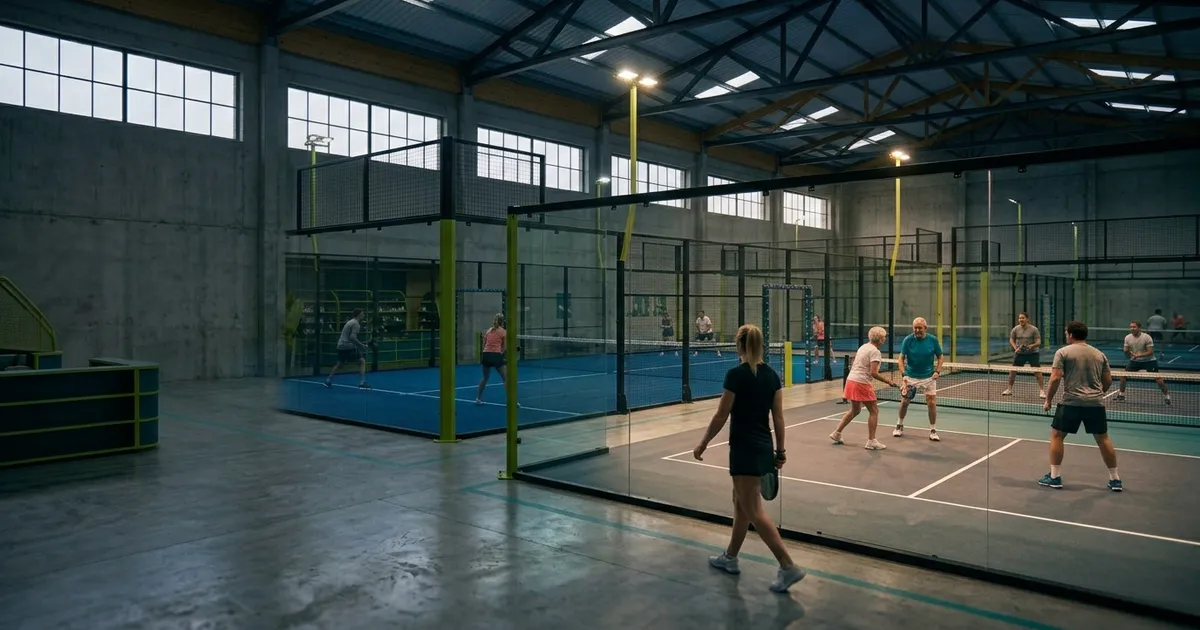
During the pandemic years, Sweden became one of the hottest padel markets in the world. Clubs opened at an astonishing pace, investors piled in, and the country went from a handful of courts to thousands in just a few years. Then it crashed. By the end of 2024, more than 100 facilities had closed and around 90 padel companies had gone bankrupt. We Are Padel, one of the biggest operators, closed 50 of its 63 Swedish clubs. Some empty halls were turned into warehouses and discount grocery stores.
Here is the important part: people did not stop playing padel. More than 600,000 Swedes were still playing in 2024. The sport survived. Many of the businesses did not.
That makes Sweden less a warning about padel and more a warning about how padel clubs are planned, funded and run. With courts now spreading fast across the US, the UK and the rest of Europe, the lessons are worth taking seriously.
What actually went wrong
Analysts and people in the industry point to the same causes.
Too many courts, too close together. During the boom, new clubs kept opening in the same areas, each assuming the demand would last. Supply grew much faster than the number of regular players.
Expensive buildings and borrowed money. Many clubs were in industrial buildings on long leases, often funded with debt. When interest rates rose and bookings fell, the fixed costs did not.
Pandemic demand that looked permanent. Padel was one of the few social activities available during lockdowns. Some of that demand faded when life went back to normal.
Price wars. With too many courts chasing the same players, clubs cut prices to fill hours, which made already-thin margins worse.
Courts, not clubs. Many venues offered little more than a bookable court in a shed. When a newer or cheaper option opened nearby, players had no reason to stay.
Lesson 1: Prove local demand before you build
The boom-era assumption was "padel is hot, so any club will fill." It did not hold.
Before you commit:
- Map every court within a 20–30 minute drive, and count courts, not clubs.
- Check how full those courts are at peak and, just as importantly, off-peak.
- Look at what is already planned or under construction nearby.
- Talk to local tennis clubs, gyms and coaches about who is actually playing.
A market with one busy club is an opportunity. A market with five half-empty ones is a warning.
Lesson 2: Start smaller than the hype suggests
Build for the demand you can see, not the demand you hope for. Four well-used courts are worth more than eight half-empty ones.
If you can, choose a site that lets you add courts later. Growing into extra capacity is far safer than paying for empty courts from day one.
Lesson 3: Keep fixed costs under control
Rent and debt do not care how many bookings you had this month.
- Be careful with long leases on large buildings.
- Avoid financing that only works if every peak slot sells out.
- Model a bad year as well as a good one, with lower utilization and some price pressure.
- Remember heating, cooling, lighting and maintenance for indoor clubs.
The Swedish clubs that went bankrupt were often not the ones with the fewest players. They were the ones with the highest costs.
Lesson 4: Off-peak hours decide whether you survive
Evening and weekend slots fill themselves at almost any new club. The hard part is weekday mornings and early afternoons.
Industry reviews of the Swedish bust highlight daytime utilization as a key problem. Clubs that survive build products for those hours:
- coaching and beginner clinics
- programs for seniors, parents and shift workers
- corporate bookings and team-building
- school and university sessions
- off-peak membership plans
Lesson 5: Build a club, not just courts
The operators that came through the downturn shifted from selling court time to building communities. Regular leagues are especially powerful, because players stop deciding each week whether to book and simply turn up.
This lines up with Playtomic's Global Padel Report 2026, which found that nine in ten top-performing clubs offer services beyond the court, such as fitness classes, recovery facilities, social events or food and drink. The same report found the best clubs earn up to five times more booking revenue per court than the weakest.
Ways to build community:
- weekly leagues and ladders
- social nights and mixers for beginners
- coaching pathways from first lesson to competitive play
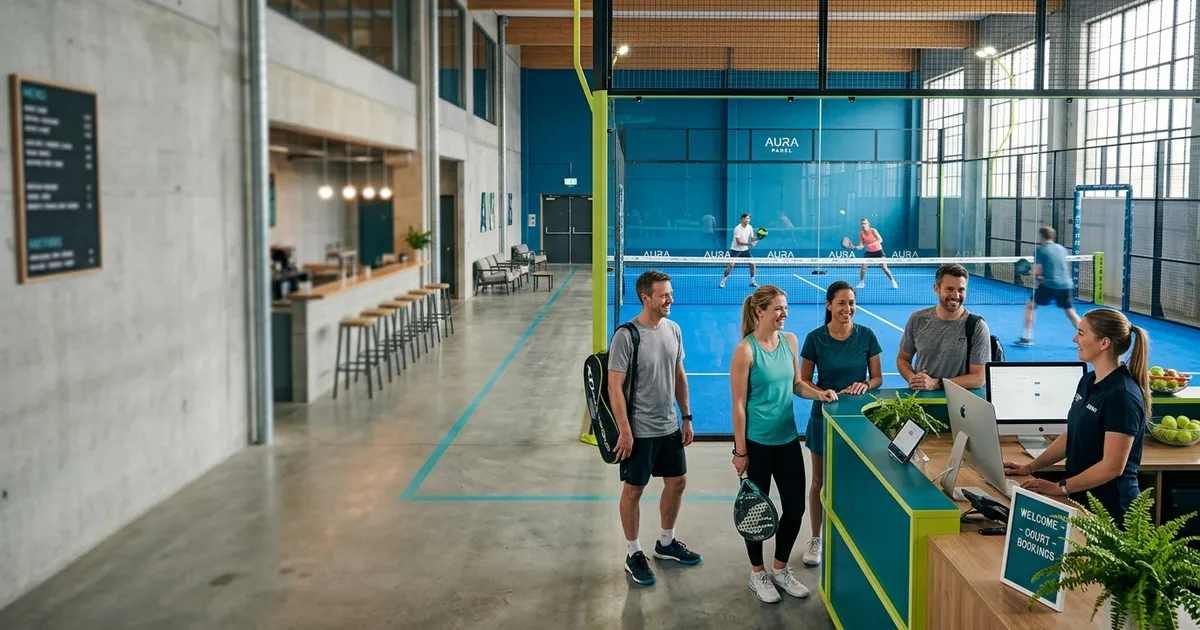
- a lounge or café where players stay before and after matches
- tournaments and club events
Lesson 6: Don't compete only on price
When there are too many courts, cutting prices is tempting. In Sweden it mostly moved players between struggling clubs without making any of them healthier.
Compete on what is harder to copy: a friendly, well-run front desk, reliable bookings, good coaching, a strong community and a pleasant place to spend time. A club people feel part of is much harder to leave.
Lesson 7: Run the club on numbers from day one
Many boom-era clubs did not know which hours, courts or products were working until it was too late.
Track, at minimum:
- utilization by court, day and hour
- revenue from bookings, memberships, coaching and the shop
- unpaid and no-show bookings
- busiest and quietest times, so you can design off-peak offers
- member numbers and renewals
If you only find out how the month went when the accountant tells you, you are reacting too late.
Is padel still a good business?
Yes, with the right plan. Padel is still growing strongly worldwide. Playtomic reported nearly 5,000 new clubs opening globally in 2025. The US had 1,110 courts in Q2 2026, up 61.6% in a year. The UK reached around 1,825 courts across 551 venues by mid-2026.
Sweden shows that a popular sport does not guarantee a profitable club. Demand has to be real and local. Costs have to be sensible. And the club has to give players a reason to stay.
Frequently asked questions
Why did padel clubs fail in Sweden?
Mainly oversupply and high fixed costs: too many clubs opened close together, often in leased industrial buildings funded with debt. When demand cooled after the pandemic and interest rates rose, many could not cover their costs.
Did people stop playing padel in Sweden?
No. Hundreds of thousands of people kept playing. The problem was that supply had grown faster than demand.
Could the same thing happen in the US or UK?
It could happen in specific areas where too many clubs open too quickly. Both markets are still growing, but owners should check local supply carefully and avoid over-borrowing.