Padel is no longer a curiosity. It is one of the fastest-growing racket sports in the world, and investors, tennis clubs, gyms and first-time founders are all asking the same question: should I open a padel club, and how do I do it without getting burned?
This guide walks through the decisions that actually decide whether a club works, in the order you will face them. It covers both the US and Europe, because the two markets are at very different stages and the right plan depends on where you are.
Step 1: Understand the market you are entering
The US and Europe look like the same sport but behave like different businesses.
The United States is early and growing fast. According to Misitrano Consulting's US Padel Report 2026, the US had 1,110 padel courts across 38 states in Q2 2026, up 61.6% from 688 courts a year earlier. Active facilities rose from 180 to 296, and the report estimates around 460,000 active players. Florida is still the centre of gravity, with Texas, California and New York following. Many US cities still have no dedicated padel venue at all, so the opportunity is often being first in a metro area.
Europe is larger and more mixed. Playtomic's Global Padel Report 2026 counted more than 58,300 courts and 20,900 clubs worldwide at the end of 2025, and most of them are in Europe. Spain has roughly 17,000 courts and is mature. Italy passed 10,000 courts in 2025. France added more courts than any other country in 2025. The UK is the hot demand market: the LTA reported around 1,825 courts across 551 venues in Great Britain in mid-2026, with about one million people playing.
The lesson from Sweden matters too. Sweden went from almost no courts to thousands in a few years, then more than 100 facilities closed by the end of 2024. People did not stop playing padel; too many clubs opened too close together, often on borrowed money. We cover this in detail in What Sweden's Padel Bust Teaches New Club Owners.
What to do: before anything else, map every padel court within a 20–30 minute drive of your planned site. Count courts, not clubs. Then look at how full they are at peak and off-peak times. A market with three busy clubs is very different from one with three half-empty ones.
Step 2: Choose the location
Location decides more of your success than court quality or branding.
Look for:
- Drive time to your players. Most bookings come from people within a short drive. Density of working adults matters more than city prestige.
- Visibility and parking. Padel is played in groups of four. Four people means up to four cars arriving and leaving at the same time.
- Neighbors. Padel is loud. The ball off the glass and the solid racket make a sharp, repetitive sound, and in the UK several outdoor projects have been refused planning permission or shut down over noise complaints. A site next to houses carries real risk, especially outdoors.
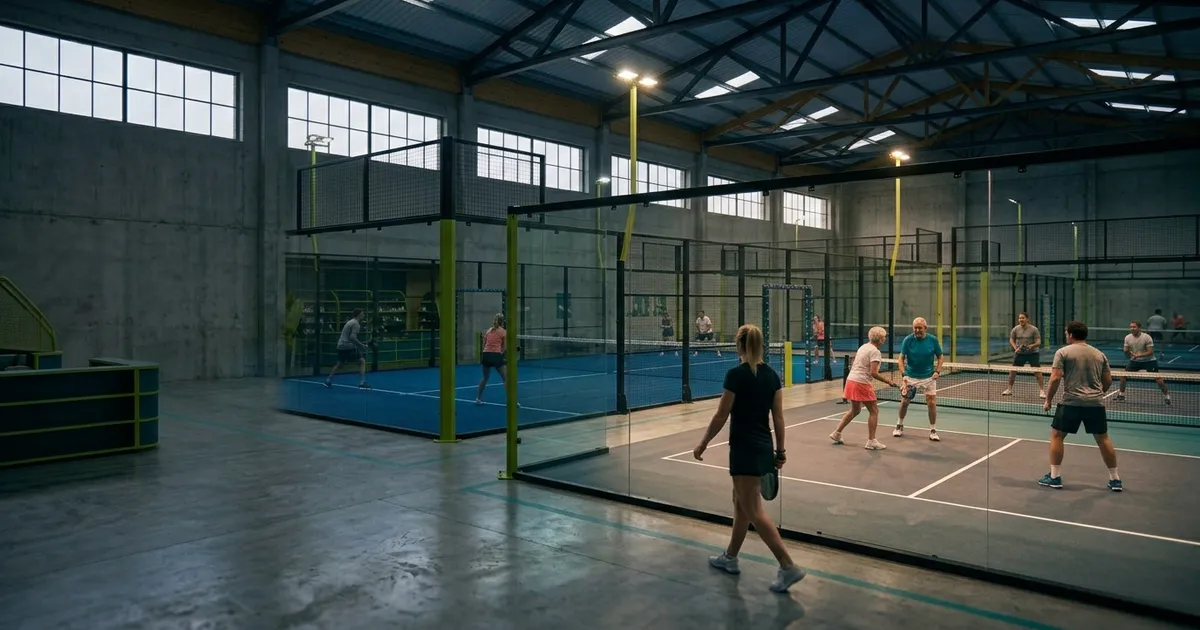
- Ceiling height if you are converting a building. Indoor padel needs a lot of clear height. If a warehouse cannot give you the clearance, no amount of design fixes it. See Padel Court Dimensions in Feet and Meters.
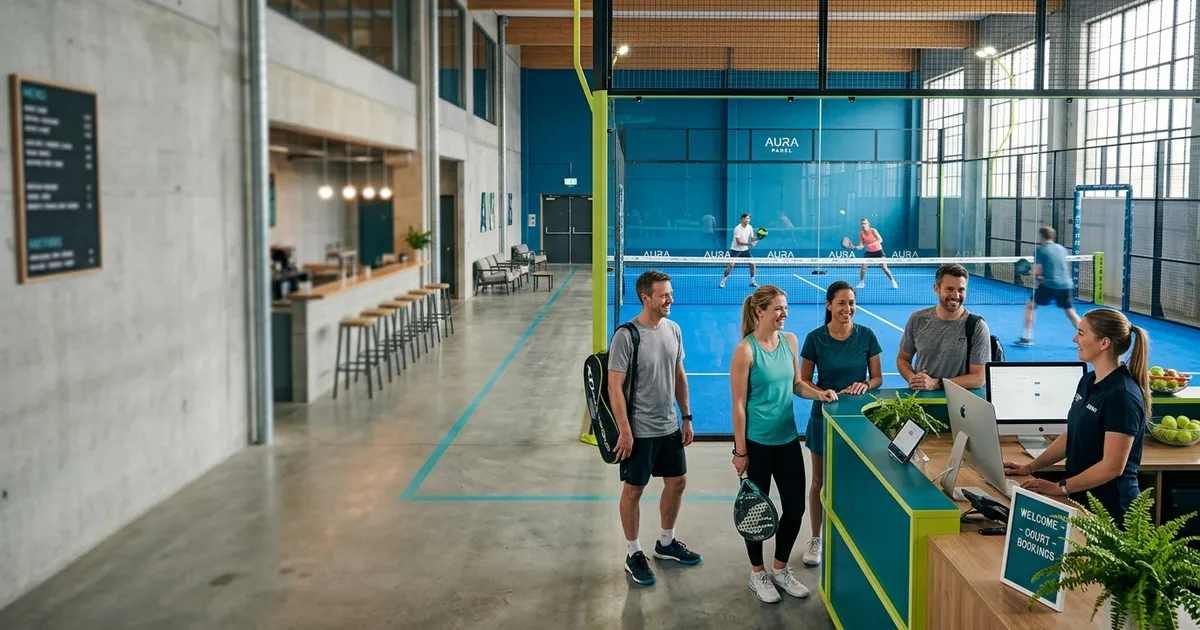
Popular routes into the business include adding courts to an existing tennis club, converting part of a warehouse or industrial unit, adding courts to a gym or hotel, and building a dedicated padel club from scratch.
Step 3: Decide indoor or outdoor
This is the biggest single decision after location.
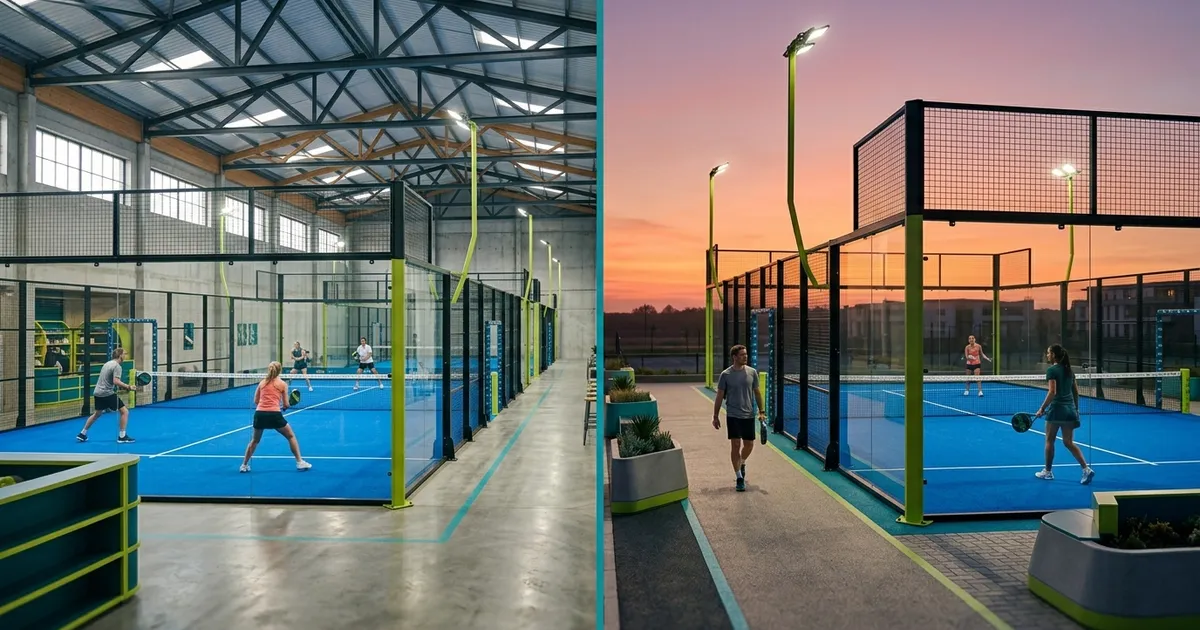
- Outdoor is cheaper to build and faster to open, but you lose playing hours to rain, cold, heat and darkness, and you are more exposed to noise objections.
- Indoor costs much more, but it gives you year-round play, more predictable bookings and fewer neighbor problems.
The trend is clearly toward indoor. In the US, 42% of courts are now indoor, up from about 39% a year earlier. In Italy, roughly 45% of courts are indoor. In northern Europe and the UK, indoor or covered courts are close to essential for a business that wants steady income through winter.
We compare both options in depth in Indoor vs Outdoor Padel Courts.
Step 4: Decide how many courts
More courts is not automatically better. Each court adds construction cost, lighting, maintenance and, for indoor clubs, rent.
Practical guidelines:
- Two courts is the minimum for a standalone club to feel like a club, and is common as an add-on at tennis clubs and gyms.
- Four courts is a typical starting point for a dedicated venue. It allows leagues, tournaments and social events without the whole club being taken over.
- Six to eight courts suits dense markets with proven demand.
A useful rule from industry analysis: a padel club needs roughly 1.3 times the floor area of the courts themselves once you add circulation, a reception desk, seating and changing areas.
If you are unsure, build fewer courts on a site that has room to add more later. Many Swedish operators failed because they built for the peak of the hype instead of for steady, everyday demand.
Step 5: Budget the build realistically
Cost estimates vary widely because sites vary widely. Ranges published by US builders and industry sites in 2026 look roughly like this:
| Item | Typical range per court (US) |
|---|
| Outdoor court, all-in (kit, slab, lighting, install) | about $40,000–$75,000 |
| Indoor court (court only) | about $70,000–$100,000+ |
| Building, HVAC and fit-out for indoor | separate, and often the largest cost |
Treat these as planning ranges, not quotes. Prices change with location, site work, drainage, glass type, and whether you are building in a high-labor-cost region such as the US Northeast. Always get several quotes from court manufacturers and local contractors, and ask each one exactly what is included.
Do not forget the costs that are not courts: reception and lounge furniture, changing rooms, lighting upgrades, signage, insurance, booking and payment systems, and enough cash to survive slow early months.
Step 6: Permits, planning and insurance
Requirements differ by country, state and city, so check with your local authority early. Common items:
- Zoning or planning permission, especially for outdoor courts, floodlights and new structures.
- Noise assessments, which UK councils increasingly ask for before approving outdoor padel near homes.
- Building permits for slabs, structures and changes of use in converted buildings.
- Business and liability insurance covering players, staff and equipment.
Talking to neighbors before you apply is much cheaper than fighting objections after.
Step 7: Plan how the club will actually run
This is where many new owners underinvest. The courts are built once. The desk runs every single day.
Decide before opening:
- How players will book. Phone and messaging apps work for the first few weeks and then become a mess of double bookings, forgotten confirmations and slots no one wrote down. Most clubs move to booking software, either a player marketplace app or their own system where players book from the club's own link.
- How you will take payment. Cash, card, prepaid, or a mix, and how unpaid bookings get flagged and followed up.
- Memberships and regulars. Monthly or annual plans bring predictable income and loyalty.
- The shop counter. Balls, racket rental, drinks and grips add up, and should flow into the same daily takings.
- Staff roles. Who can change prices, who can cancel bookings, who sees the revenue reports.
- Reports. You need to see bookings, utilization and income by day and by court, without phoning the desk.
The strongest clubs also invest in community: leagues, social nights, beginner sessions and coaching. Playtomic's 2026 report found that nine in ten top-performing clubs offer off-court services such as fitness classes, recovery areas, social events or food and drink. Clubs that only rent courts are the easiest to replace.
Step 8: Launch and fill the courts
Before opening:
- Run free or discounted "try padel" sessions. Most people have never held a padel racket.
- Partner with local tennis clubs, gyms, offices and schools.
- Set up a Google Business Profile with photos, hours and a booking link.
- Start leagues and regular social sessions early, so players come back weekly without being asked.
After opening, watch utilization closely. Peak evening slots will fill first. Daytime and early weekday slots are where most clubs win or lose money, so build products for them: coaching, seniors' sessions, corporate bookings and school programs.
A simple pre-launch checklist
Frequently asked questions
How long does it take to open a padel club?
It depends mostly on permits and the building. Installing a court itself can take only days once the slab is ready, but planning approval, construction and fit-out usually take months.
Is padel a good investment in 2026?
Demand is real and still growing in both the US and Europe. The risk is oversupply in a local area and taking on too much debt. A club in an under-served area with sensible costs is a very different bet from the fifth club in the same neighborhood.
Do I need to be a padel expert to run a club?
No, but you need people who understand the sport for coaching and community, and solid systems for bookings, payments and reporting.
Should I start with indoor or outdoor courts?
In warm climates outdoor can work well. In northern Europe, the UK and colder US states, indoor or covered courts make year-round revenue far more reliable.